
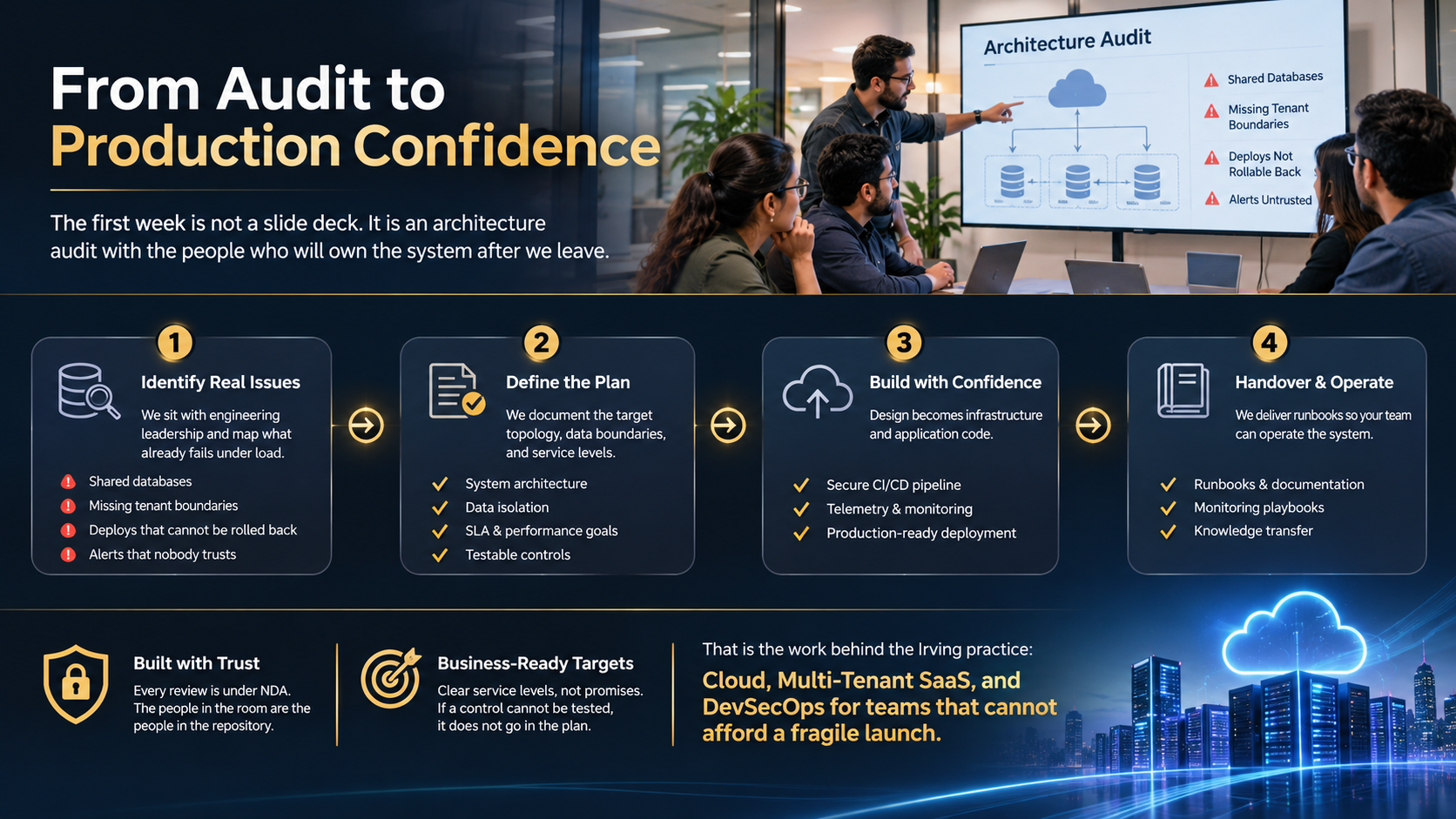
The first week is not a slide deck. It is an architecture audit with the people who will own the system after we leave.
We sit with engineering leadership and map what already fails under load: shared databases, missing tenant boundaries, deploys that cannot be rolled back, and alerts that nobody trusts. The output is a short list of constraints, not a catalog of tools.
What we write down
Target topology, data boundaries, and the service levels the business will actually hold us to. If a control cannot be tested, it does not go in the plan.
Every review is under NDA. The people in the room are the people who will be in the repository.
What happens next
Design becomes infrastructure and application code, with CI secured and telemetry in place before the first production cut. Then we hand over runbooks so your team can operate the system without us in the loop.
That is the work behind the Irving practice: cloud, multi-tenant SaaS, and DevSecOps for teams that cannot afford a fragile launch.